


Negligence Claims: Who You Can Sue After an Accident Involving a Truck Driver to Maximize Your Compensation
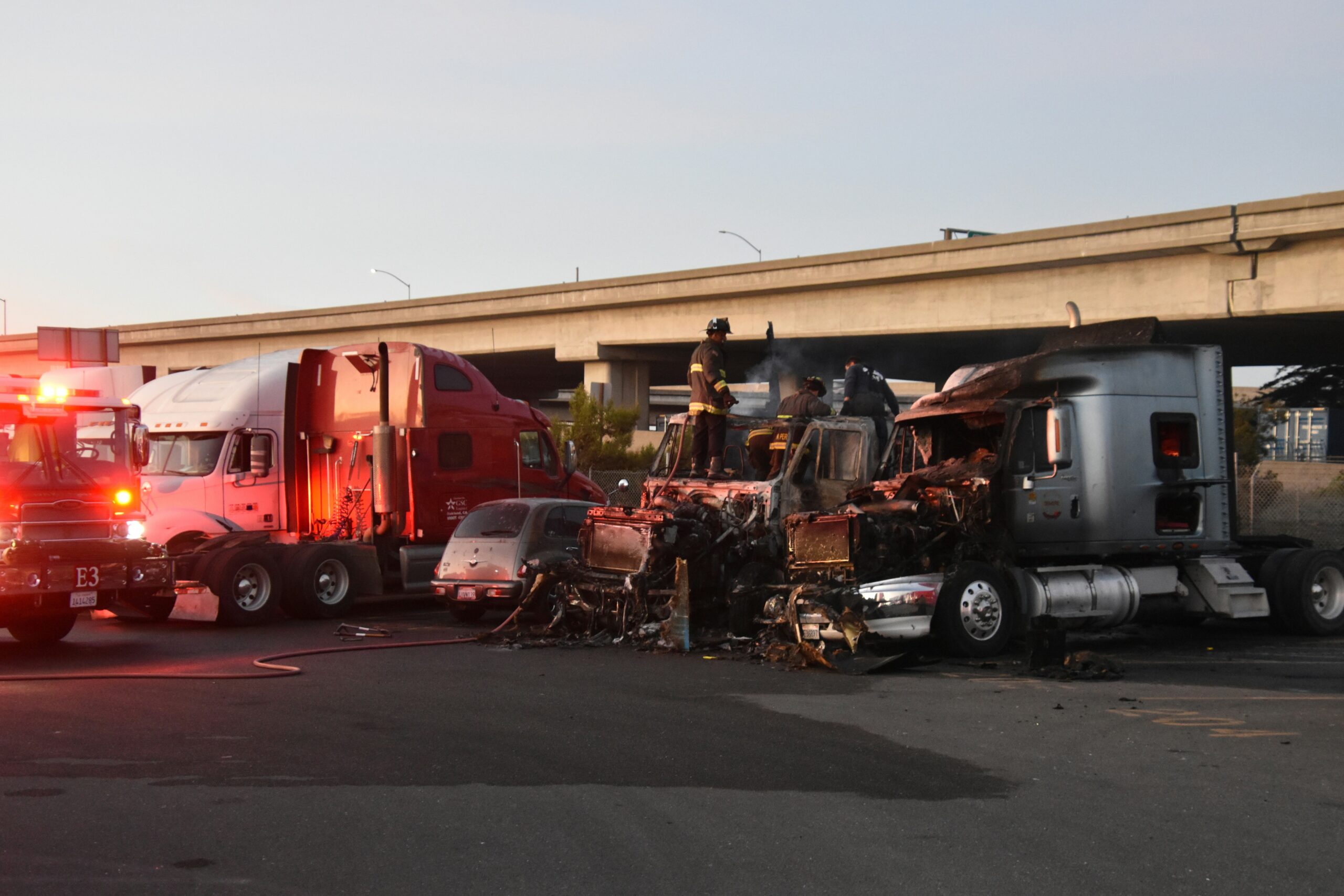
Following a car accident with a semi or commercial truck, there are multiple avenues for recovery for your physical and emotional injuries. The driver of the semitruck and their trucking company or other employer may be held responsible for compensating the victims of the accident. Some of the legal causes of action used are negligent hiring, entrustment, supervision, and retention, which may be valuable to your case and recovery. The driver’s employer is responsible for their driver’s actions and resulting damage through the doctrine of respondeat superior; this makes an employer vicariously liable for the actions of their employees. Motor Carriers are responsible for ensuring their drivers are safe and fit for navigating roadways while performing their demanding job. If they fail to do this and put the public in harm’s way, they must be held accountable.
If you have been in a car accident involving a truck, contact Charles E. Boyk Law Offices, Toledo’s truck accident attorneys, for a free consultation regarding your experience and claim. With convenient offices throughout Toledo and northwest Ohio up to Ann Arbor, Michigan, these experienced truck accident and personal injury attorneys can assist individuals involved in accidents on major nearby trucking routes, such as U.S. Route 24, U.S. Route 23, I-75, I-475, and I-90.
What Are These Negligent Causes of Action?
The doctrine of respondeat superior simply allows an injured person to hold the employer responsible for their negligent employee’s conduct that caused the trucking accident. A personal injury lawyer and their team will research to determine whether the individual was an employee at the time of the accident, whether they were acting within the scope of their employment, and whether the employee’s actions were to the benefit of the employer. If the lawyer determines there are enough facts to support all three of these inquiries, they may rely on respondeat superior.
The legal claims discussed are all based on negligence. Negligence is “the failure to behave with the level of care that a reasonable person would have exercised under the same circumstances.” A person is deemed negligent based on their actions or their failure to act when they have a duty to do so. An employer or the truck driver is negligent if they have a legal duty that they fail to act on, an individual is harmed, and the failure to uphold the legal duty is the proximate cause and the cause-in-fact of harm to the injured person. A lawyer at one of Charles E. Boyk’s conveniently located offices will review the facts of your experience to determine whether the driver or their employer was negligent.
- Negligent Hiring: The employer did not fulfill one of the requirements of hiring that the law requires.
- Negligent Entrustment: The employer lent a dangerous item, the commercial motor vehicle or truck, to their employee when they knew or should have known that the employee was not qualified to operate the vehicle.
- Negligent Supervision: The employer failed to provide reasonable care, leading to a trucking accident. Employers must be aware of their employees’ behavior and prevent foreseeable risks.
- Negligent Retention: The employer failed to take reasonable action to discipline and/or terminate an employee that they knew or should have known was unfit or unqualified for their position. The employer is liable for their own negligence and the damage resulting from their employee’s actions.
These claims may be brought in combination or on their own. There are also instances where an injured person can hold the employer independently responsible for their negligent actions, such as failing to maintain their vehicles. Discussing your trucking accident with a truck accident lawyer at Charles E. Boyk Law Offices during a free consultation can help determine which claims may be brought and how to best gain compensation for your injuries and unfortunate experience.
Applying for a CDL
Individuals must meet the requirements of their state’s Department of Motor Vehicles and the Federal Motor Carrier Safety Administration (FMCSA) to get a commercial driver’s license (CDL) and drive a commercial motor vehicle (CMV). These regulations hold individuals with CDLs to a higher standard than average drivers, even when operating non-commercial, personal vehicles. These rigorous standards are in place because the responsibility to maintain control of a large, heavy vehicle is difficult and requires specialized training, knowledge, and skill.
Individuals who wish to acquire a CDL must be 18 years old to drive within the state they are licensed in (intrastate) and 21 years old to drive CMVs across state lines (interstate). In Ohio, they must have a valid Ohio driver’s license and provide proof of U.S. citizenship or permanent residency. Truck drivers may only hold a CDL in one state; this is typically their home state, and where their standard, non-commercial driver’s license was issued. Drivers must also satisfy federal standards for their vision and physical health. Lastly, drivers must complete entry-level training and knowledge and skill tests to ensure they are familiar and confident with their equipment. These tests include basic knowledge checks, pre-trip inspection, a basic maneuverability test, and a road test to ensure those driving CMVs are well-rounded in all applicable skills. Drivers must complete additional tests to get endorsements such as transporting hazardous materials, driving a school bus, and driving a vehicle with multiple trailers.
An individual may be disqualified from receiving a CDL for a set period or for life due to incidents relating to drug and alcohol use in any personal or CMV. (Ohio BMV). This includes prior convictions for operating a vehicle while intoxicated (OVI), refusing to take a drug or alcohol test, or being under the influence of a controlled substance. Operating a CMV and committing a hit and run, negligently causing a fatality, or using the vehicle to commit a felony are further grounds for disqualification. These disqualifications protect the applicant driver, employers, and the public by keeping individuals with prior dangerous driving offenses off the nation’s roadways in large, heavy machinery.
Once a driver meets the requirements, they can drive CMVs and apply for positions requiring a CDL. If you were involved in an auto accident with a truck driver, your attorney and their team may investigate to ensure the driver was qualified to obtain a CDL. If they were not qualified, they and the company that hired them may be penalized. Contact our Toledo truck accident and personal injury lawyers at Charles E. Boyk Law Offices to discuss your experience and claims with an experienced lawyer.
Employer Liability
The FMCSA provides guidelines for motor carriers and employers to ensure they are hiring and maintaining competent, skilled, and knowledgeable commercial drivers. These requirements are also federal law within the Code of Federal Regulations (CFR). These laws are in place to keep public roadways safe for travel and minimize the risk of accidents involving large commercial vehicles such as semitrucks. Failure to implement and follow the guidelines may result in the employer being subjected to liability and facing hefty fines. If you believe you or a loved one was in a trucking accident due to the employer’s failure to implement and exercise the following duties, an attorney may be able to assist you in receiving compensation from the driver and their employer.
The following instances may supply a basis for negligent hiring claims:
A person or corporation running a motor carrier business must ensure that their employees who operate CMVs within the scope of their employment are actually qualified to do so and that there are no circumstances that disqualify them. (49 CFR 391.11). The federal law begins this duty to hire qualified drivers from the very first application potential employees fill out. (49 CFR 391.21). Applicants must provide information that goes back 3 years from the date of their application. This information includes prior addresses, motor vehicle accidents the applicant was involved in, details of each violation of motor vehicle laws or ordinances, and names and addresses of prior employers. These reporting requirements allow employers to ensure they are hiring competent, safe, and recommendable drivers. Employers must independently inquire in each state where the applicant holds or has held any motor vehicle license or permit within the last 3 years to obtain the applicant’s motor vehicle record for the past 3 years. This inquiry must be completed within 30 days of hiring the driver. With responsibility placed on the applicant driver and the employer, liability is allotted to both entities; therefore, recovery from both entities may be available. Also, employers are required to keep the documentation resulting from all mandated inquiries and certifications each driver has, even after their employment relationship terminates, in a driver qualification file. (42 CFR 391.51). This file may be helpful for your truck accident and personal injury lawyer to hold the employer responsible for negligent hiring of the driver involved in your trucking accident, in addition to other claims.
Failing to report the necessary information or reporting false information makes an employee unqualified. Failure of an employer to require reporting of this information and making good faith efforts to verify it may be a basis for a negligent hiring claim. Failure to make the necessary inquiries at and throughout employment may be the basis for a negligent hiring, retention, or supervision claim. There are many legal avenues to recovery; utilizing an experienced personal injury lawyer may be in your best interest to receive adequate compensation from the truck driver and their employer. Your Toledo truck accident lawyers at Charles E. Boyk Law Offices are committed to their clients and maximizing the compensation they receive.
Since 1991, the Department of Transportation (DOT) and federal law require DOT employees to be drug and alcohol free with testing measures put in place to ensure the safety of all. Employers must conduct controlled substance testing and receive a negative, no drugs in their system, result before a driver ever performs any work for the employer. Independent companies may also implement their own additional testing guidelines, such as alcohol testing prior to the driver’s employment. The DOT and FMCSA maintain the Drug and Alcohol Clearinghouse, which employers, FMCSA, state Driver Licensing Agencies, and state law enforcement can consult for real-time information about drug and alcohol program violations of CDL drivers and permit holders. The Clearinghouse database is a useful tool for employers to use when conducting pre-employment queries and reducing the risk of negligent hiring practices.
The following instances may supply a basis for negligent entrustment, supervision, and/or retention claims:
Employers must ensure their drivers continue to be qualified by conducting annual inquiries and reviews of their driving records. (49 CFR 391.25). If there are any indications that the driver has exhibited a disregard for the safety of the public, such as reckless driving or OVI, the employer may declare them unqualified. Failure to continue to review their employees’ driving records or take appropriate corrective actions may be the basis of an action against the employer.
There are also instances that require controlled substance and alcohol testing as soon as practicable after a driver is involved in an accident or issued a citation. Throughout their employment, drivers must be subjected to random controlled substance and alcohol testing to make sure they are constantly in a safe, non-impaired state. To further protect the driver and the public, an employer must conduct an alcohol or controlled substance test if they have reasonable suspicion that the driver has consumed one of these substances. (49 CFR 382.307). To protect drivers from constantly being subjected to testing, the employer must explain specific, contemporaneous observations concerning the appearance, behavior, speech, or odors emitting from the driver. They may also base a test on symptoms of chronic use or effects of withdrawal. Failure to prohibit an employee who is known or reasonably suspected to have partaken in the use of controlled substances or alcohol prior to or during their shift, or failure to perform any mandatory testing, may be the basis of an action against the employer.
Federal law requires truck drivers to be alcohol free for 4 hours before their shift begins, during their shift, and after they are involved in an accident until they undergo a post-accident alcohol test. (49 CFR 382). A driver who has consumed alcohol over 4 hours before their shift begins may not report to work if their blood alcohol concentration (BAC) is 0.04 or greater. While this is under the standard legal limit, truck drivers are held to a higher standard on the roadways because of the heavy and potentially dangerous vehicles they operate. Also, no one should operate any vehicle after consuming drugs or alcohol for their own and everyone’s safety. If an employer actually knows or reasonably suspects that one of their drivers has a BAC of 0.04 or greater or knows of the consumption of alcohol in violation of the law, they can be held accountable for allowing the driver to work in an impaired and illegal condition. If there are suspicions of alcohol or drug use relating to the truck accident you were involved in, your lawyer at Charles E. Boyk Law will work to uncover whether this avenue of recovery is available to you.
Hours of Service (HOS) violations
There are legal limits to how long a CMV driver may drive at a time and mandated times for breaks and rest. Motor carriers have a duty to ensure these Hours of Service (HOS) rules are followed. Each state has its own HOS requirements for drivers or companies that only operate within the state. The federal HOS requirements ensure that those who are hauling certain categories of property or passengers for a company that operates interstate are awake, alert, and competent to operate a vehicle. The law has exceptions from these rules for short-haul truckers who travel less than 150 air miles from their starting location. While there are slightly different requirements for drivers who haul property and drivers who transport passengers, the following HOS regulations are those that apply to drivers hauling property:
Truckers can only work 14-hour shifts and must have a 10-hour rest period off-duty. Within their 14-hour shift, they can only drive for 11 hours total. Within their 11 hours of driving, truckers must take a 30-minute break after driving for a total of 8 hours. Even with this break or nap during their shift, they may not exceed driving for 11 hours in one shift. There are further provisions allowing drivers to rest in their sleeper berth, a portion of the cab of the truck that contains a bed, to split up their rest and drive time. The law understands that emergency and unexpected adverse driving conditions occur so there is some wiggle room in special circumstances.
Within a 7-day week, a truck driver who does not drive daily must take a break after being on duty for 60 hours. A trucker who drives daily may be on duty for 70 hours within an 8-day period before they are required to take a break. After meeting the maximum hours, truck drivers must take a 34-hour break to rest and become refreshed for their next drive. Driving a CMV and hauling a heavy load imposes stress on the driver; these mandatory breaks ensure they return to the road clear-headed. It is important for drivers to understand and follow the mandatory maximum drive time and minimum rest time rules for their and the public’s safety.
While there are laws in place limiting drive time, there may be concerns about whether truckers are actually following these guidelines. Within the last 10 years, the Electronic Logging Device (ELD) Rule was enacted to ease these concerns. With the ELD Rule, most CMV drivers must use electronic logs instead of paper logs. Drivers must submit their Records of Duty Service (RODS) compiled from the ELD to their employer. The switch to electronic logs takes a tedious task away from truckers so they can focus on operating safely because the ELD is synchronized with the engine, so the drive, rest, and off-duty time is automatically recorded.
The need to switch from paper to electronic logs arose after problems with missing details, log falsification, inaccurate entries, and overall messy filings. These problems can be major and result in catastrophe if a driver has overworked themselves, driven too much, or is at a loss of alertness. The electronic logs provide relief to employers as they may feel increased confidence that their drivers are following HOS rules and reporting accurately, thereby lessening the risk of an action such as negligent supervision being brought against them. Yet, the electronic logs may still be altered after they are compiled, so employers must continue to exercise their due diligence. When someone has been involved in an accident with a CMV, the electronic logs and RODS may be a valuable resource for your personal injury attorney at Charles E. Boyk Law to use. These logs may reveal that a driver was not following the law and that their employer knew this but failed to appropriately supervise or discipline the driver.
If you or a loved one has been harmed by an accident involving a commercial motor vehicle, truck, or an individual operating with a CDL, contact Charles E. Boyk Law Offices for a free consultation. With over 10 offices in Northwest Ohio, multiple offices within Toledo, and lawyers stretching east to Sandusky, Ohio, attorneys at Charles E. Boyk are familiar with major trucking routes and locally available for your convenience. Discussing your experience with an experienced trucking accident and personal injury attorney allows for the opportunity of maximum recovery against all at-fault parties for the emotional and physical damages stemming from the accident.

