


How Have Larger Vehicles Affected Pedestrians?
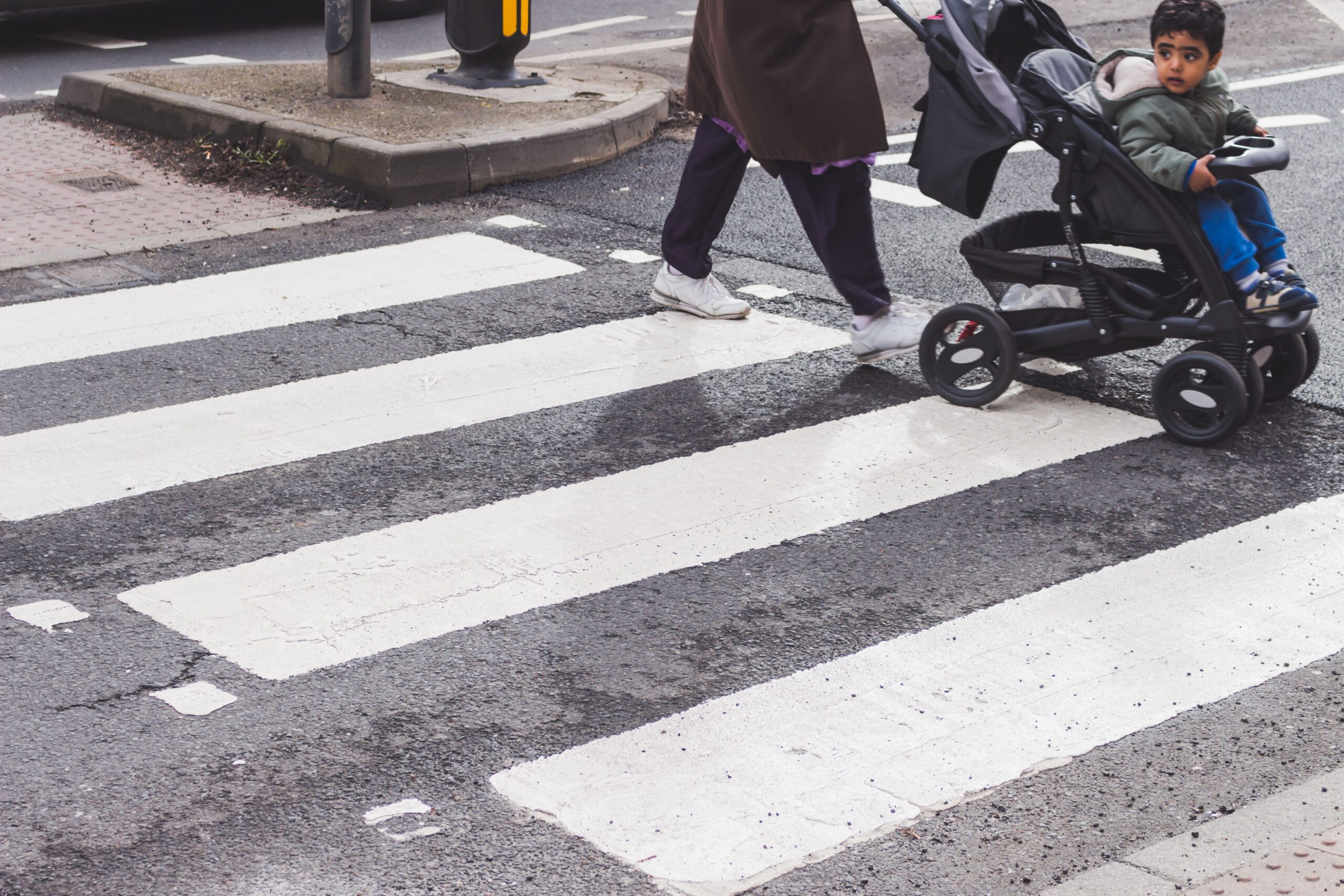
I am sure that you have noticed while driving that SUVs and trucks dominate the roads by size and width. These large vehicles have increased drivers’ abilities to transport more passengers and haul more weight, but it has serious implications for pedestrians. In 2024 alone, 9,200 pedestrians and cyclists were killed in traffic accidents. This is about a 65% increase since 2010. As vehicles continue to grow in height, the visibility around the vehicle decreases.
In the early 2000’s the average hood size was about 26”; now the average hood size is 47” as more people are driving pick-up trucks and SUVs. The increase in hood size not only decreases visibility but, if a pedestrian is struck by a vehicle with a high hood, it increases the likelihood of injuries to sensitive parts of the body like the torso and head. Pedestrians are already at high risk of not being seen on roadways and, in turn, being victims of horrible accidents, but this steady increase in vehicle size is causing a larger danger. Pedestrians injured due to motor vehicle accidents know they can trust Charles Boyk Law Offices based on our 40 + years of experience and proven track record of success. Our team of pedestrian accident attorneys is dedicated to advocating for the rights of victims by guiding them through the civil justice system, which allows victims and their families to seek financial compensation for the harm they suffered.
The New York Times published a study correlating the increase in hood size to the increase in pedestrian deaths in motor vehicle accidents. Vehicles with larger front ends are 45% more likely to cause fatalities in crashes with pedestrians than smaller vehicles. Pedestrians are at a higher risk of death or extreme injury because vehicles have taller hoods, and those same vehicles have larger blind zones. Think of semi-trucks, for example; they are vehicles with large blind spots. They sometimes have stickers on that say, “If you can’t see my mirrors, I can’t see you.” Oftentimes, small vehicles will be hit when semis attempt to get into a lane when the semi fails to see the small car there. The car was simply in the vehicle’s blind spot. Nothing is different from pedestrians walking in front of large SUVs or pick-up trucks; the higher the car sits, the less the driver can see at the lower level.
According to the New York Times, Chevrolet’s Silverado pick-up truck’s blind spots have grown almost fifty percent since the early 2000s. GMC’s Sierra pick-up trucks and Toyota’s Tacoma pick-up trucks’ blind spots have had an increase of about sixty percent since the early 2000s.
While vehicles sitting higher off the ground cause danger to pedestrians, the increased height exceeds the average American’s center of gravity. In terms of the view of the driver, the steering wheel is much higher due to the vehicle height. In many cases, the pedestrian’s head is covered by the steering wheel, not allowing the driver to see the person.
Today, the average vehicle is about three feet high. Meaning anyone below 5 feet 6 inches, which is about half of Americans and any children, would be slammed straight into the pavement if they were hit straight on by a car. The center of gravity for an average person is around the belly button region. This is problematic. If the car were lower to the ground and hit the person below their center of gravity, they would likely be struck in their lower body, flung onto the hood.
This is a shocking thing to imagine, but it is often safer for pedestrians to be struck lower on the body rather than in areas like the chest or head and flat onto the pavement. When the pedestrian is flat on the pavement, they are likely to be killed and run over by the vehicle.
Safety Equipment
Most new cars are equipped with technology to automatically engage the brakes if a pedestrian is detected in front of the car. According to Bill Grotz, a spokesman for General Motors, a new study found that G.M. vehicles with said technology reduced injuries by thirty-five percent. The technology is great to have on vehicles, but does it 100% reduce the risk to pedestrians? The Insurance Institute for Highway Safety conducted a study that found that automatic braking does not completely prevent collisions. The technology can fail under a variety of conditions like high speeds, bad weather, malfunction, a shadow on the road that is mistaken for a person, the person is wearing dark clothing, low light, the pedestrian is running rather than walking, the person isn’t upright, or it is a child who is too small to detect. An array of factors go into the computer system that detects a pedestrian, which increases the likelihood of it not working.
Why Are Car Manufacturers Making Larger Cars?
Starting in 2011, the regulations set by the National Highway Traffic Safety Administration, which is a part of the U.S. Department of Transportation, made changes to the Federal Corporate Average Fuel Economy (CAFE), calling for a five percent increase in fuel economy per year. This change in regulation called for a fleet average of 54.5 miles per gallon by 2025. Most would assume that cars would get smaller to abide by the new regulation and there would be a decrease in the number of SUVs and large trucks on the road; however, that is not the case.
An article from the University of Michigan’s College of Engineering, CAFE will have the opposite intended effect. The “loophole” that car manufacturers have found is that the new standards depend on the size of the vehicle that the auto manufacturers produce. The cited 54.5 miles per gallon by 2025 is an average, but each car company has different standards they must meet each year.
This number is determined by the “footprint” that each vehicle makes. A vehicle’s footprint is calculated by its track width multiplied by the wheelbase. Most likely, vehicles with a large footprint are larger and cross standard (smaller) length-by-width thresholds. When these large vehicles cross these thresholds, they are granted less strict fuel-economy standards. The flexibility in the fuel-economy standards for larger cars allows car manufacturers to produce larger vehicles while not providing technology to improve gas mileage. In short, the 2011 CAFE regulations created a loophole for car brands to make larger vehicles and get away with it.
The truth is, Americans enjoy larger vehicles, and car brands are going to give their consumers what they are demanding. Consumers are interested in larger vehicles for numerous reasons, but that demand is causing more pollution, less fuel efficiency, and danger to pedestrians.
As cars get larger, it can undermine the fuel economy improvement averages by one to four miles per gallon. This decrease in efficiency is equivalent to operating three to ten extra 10,000-megawatt-class coal-fired plants in one full year. To put that into perspective, a 1,000-megawatt plant could provide power for more than half a million people. As most car manufacturers are participating in the business of large vehicles, this results in the industry not achieving the fuel economy goal set by CAFE.
How do Pedestrian Accidents Work?
Every case is different, and no case follows a traditional path. However, each case has shared characteristics that are similar across all cases relating to a motor vehicle accident injuring a pedestrian.
A pedestrian can be struck by a vehicle for any number of reasons. The driver of the vehicle could have been distracted, failed to yield, or simply failed to see the person. This information is used to establish negligence. However, negligence is assessed for both parties involved in the accident. The pedestrian could have been wearing dark clothing at nighttime or jaywalking. All in all, negligence can be shared through something called “comparative negligence.”
Once negligence is assessed by the insurance companies, compensation is allocated based on the percentage of negligence assigned. For instance, if the court assigns 60% fault to the defendant and 40% to the plaintiff, the plaintiff may only recover 60% of the damages, rather than the full amount. Compensation is calculated by the monetary amount of medical care required due to the accident, future care, any lost wages, and pain and suffering. Our accident lawyers know how to challenge these assessments to ensure you are getting the most compensation possible.
In some very catastrophic accidents, a reconstruction expert may be required to establish facts like sightlines, speed, hood-height blind spots, etc. to prove that the driver should have seen the pedestrian. As discussed, vehicles are growing in size in both width and height; the blind spots of vehicles are growing, making it more difficult for drivers to see pedestrians even if they are doing everything right. Our experienced accident lawyers have worked with reconstruction experts in several cases to help reach substantial settlements in accident cases.
With vehicles getting larger, they are causing serious, life-lasting injuries like traumatic brain injuries, spinal cord injuries, amputations, and chronic pain. With the stress of constant medical care, medical expenses can accumulate very quickly and add to the issue at hand.
This process can be very complicated, and your focus as a victim should be getting better and taking care of your well-being. Our attorneys work with defense counsel and the insurance companies in every realm of the process from establishing negligence to settlement.
Tips For Pedestrians
Vehicles are getting larger, and it does not seem like they are planning to shrink back down any time soon. As drivers may not be able to see a shorter person in front or behind their vehicle due to sightlines, there are some things that pedestrians can do to try to make themselves more visible to drivers.
- When crossing an intersection and you have the right-of-way, assume a car may run the red light and look left and right before crossing the road to ensure all surrounding vehicles are stopped.
- Try not to walk in the road even if there are no sidewalks. Walking in the road can take drivers off-guard because they would not expect a person to be walking on the road. Keeping your distance is the safest option.
- Wear bright colored clothing at all times with reflectors. Many times, pedestrians are struck by a vehicle late at night or early in the morning when there is little visibility. Reflectors create increased visibility when light from the driver’s headlights hits the pedestrian, therefore making them aware of their presence.
Our Experience
Being a victim in a car accident is devastating, let alone being a pedestrian struck by a vehicle; our expert pedestrian attorneys understand what you are going through. Our duty is to explore all potential legal channels and exhaust all options in pursuing your claim. We are fighting your legal battles to ensure that you are compensated for such an injustice. Your main concern is to get better and to hopefully return to the state you were in before the accident. Our firm has years of experience in assisting injured pedestrians as a result of motor vehicle accidents.
In one case, our client was riding his bicycle when a car was following behind him. The vehicle failed to maintain an assured clear distance and struck our client. The defendant was operating a large GMC van, so it is likely that the size of his vehicle could have inhibited the driver’s ability to know how close he was to our client. As a result of the accident, our client suffered from a traumatic brain injury, a broken right leg, and was forced to be in a wheelchair for numerous months. Our skilled pedestrian accident attorneys were able to obtain a settlement of policy limits for our client’s injuries.
In another case, our client was walking near the curb lane with his walker as he was unable to walk on the sidewalk due to bad weather. The defendant was traveling down the road while attempting to change lanes. While doing so, they failed to see our client walking and struck him. Unfortunately, our client passed away due to the accident. Our firm is currently pursuing a wrongful death claim to reach the best conclusion for the victim’s family.
In a separate case, our client’s grandfather stopped at home to grab something from his house. He exited his home and failed to see his two-year-old grandson exit the home as well. The grandfather got into his vehicle and proceeded to reverse his vehicle to leave the premises. Unknown to the grandfather, his grandson was behind his vehicle. As he reversed, he struck our minor client, causing catastrophic injuries. The grandfather was operating a GMC Yukon, which sits high off the ground and has a limited field of view around the lower sides of the vehicle. Due to the size of the vehicle, it would have made it very difficult for the grandfather to see his grandson, who is only a few feet tall. Our firm is currently working with the insurance company to reach the best conclusion for our client and his family.
Reach Out to An Experienced Ohio Pedestrian Injury Attorney Today!
If you or a loved one was an injured pedestrian in a motor vehicle accident, you need a skilled pedestrian accident attorney to navigate your case and secure the compensation you deserve. Here at Charles E. Boyk Law Offices, our experienced pedestrian injury attorneys are dedicated to helping you through these difficult times because we have stood in your shoes and know how difficult this is to process. As one of the top-rated personal injury firms in Ohio, we understand the complexities of pedestrian injury cases and will work tirelessly to ensure that you receive the compensation and justice that you are entitled to.
Reach out to us today for a free case evaluation and discover how we can assist you in getting the justice and financial recovery you need. If we are unable to take your case, we will refer you to someone who may. Let us put our experience, connections, and expertise to work for you and support you every step of the way.